
Structural Drying and Dehumidification in Lebanon, TN
Walls, floors and framing dried to verified readings with air movers and dehumidifiers.
- ✓Available 24/7
- ✓Written Scope First
- ✓Call +1 (844) 468-2611
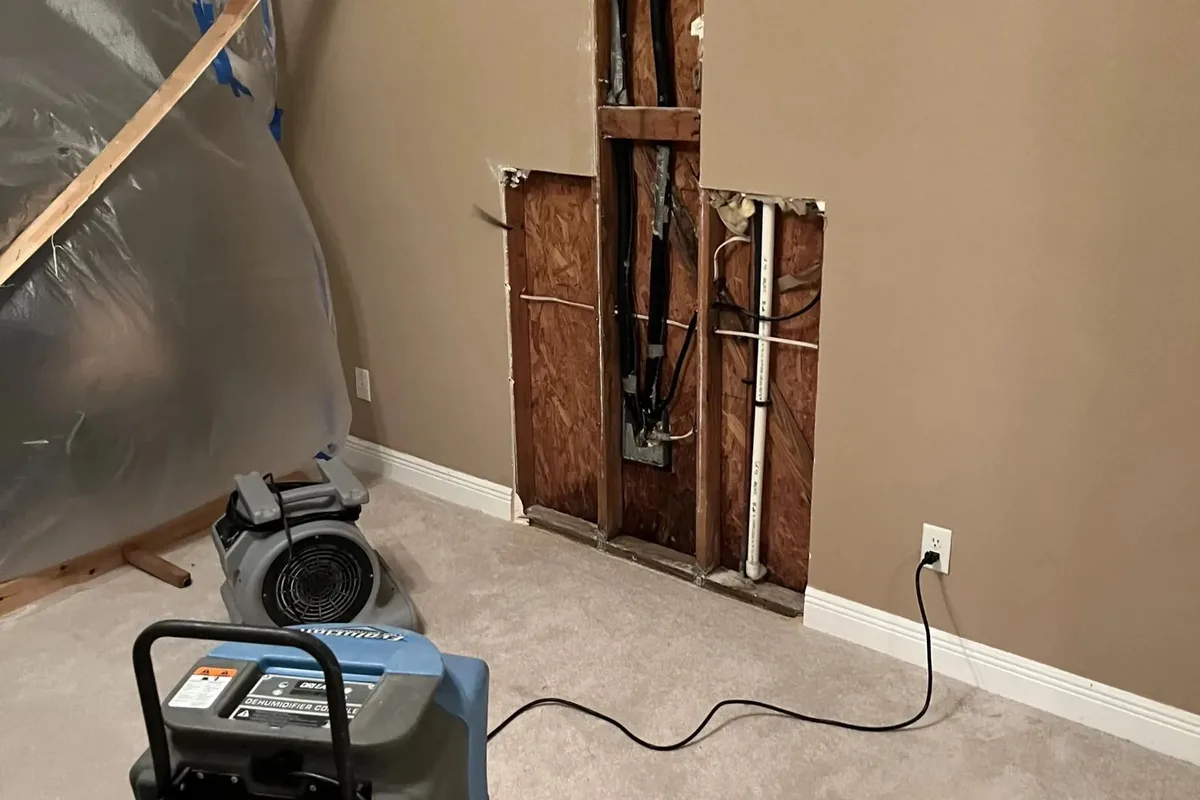
A room can feel dry while its structure is still wet. Drywall wicks water upward, wood framing holds moisture for days, and a concrete slab releases it slowly for weeks. Drying that stops when the surface feels dry leaves the inside wet, and wet framing is where mold starts and where floors cup and buckle months later.
Structural drying through Wilson Water Pros is measured drying. Moisture meters take baseline readings in walls, floors and framing on the first visit, then air movers and commercial dehumidifiers are placed to move dry air across every wet surface. Readings are logged daily and the equipment is adjusted as the numbers fall. Only when the readings match the dry standard for the material does the equipment come out. This is the stage that follows emergency water extraction on nearly every job.
Wilson Water Pros takes calls across Lebanon, Tennessee, in ZIP codes 37087, 37088 and 37090, plus 37071 and 37136 in Wilson County, from downtown and the Public Square to StoneBridge, Spence Creek and Hartmann Plantation. The technicians are local, the drying is measured with moisture meters, and every job is quoted in writing before work begins.
Signs Your Home Needs Structural Drying
- ✓Walls that feel cool or damp to the touch days after a leak
- ✓Baseboards swelling, peeling paint or bubbling drywall
- ✓Hardwood floors cupping or buckling
- ✓A musty smell that stays after the water is gone
- ✓Moisture meter readings above the dry standard
Fans, Dehumidifiers, or Both?
Both, in almost every case. Air movers push wet air off surfaces so evaporation can happen, and dehumidifiers pull that moisture out of the air so it does not settle back into the structure. Fans without dehumidifiers just move wet air around the house; dehumidifiers without air movement dry the air while the walls stay wet. The pair, placed from the readings, is the standard.
How Structural Drying and Dehumidification Works
- Baseline readings. Moisture meters record how wet each material is before drying starts.
- Place the equipment. Air movers and dehumidifiers are set from the readings, not by habit.
- Log it daily. Readings are taken each day and the equipment is moved as the numbers fall.
- Check the hidden spots. Wall cavities, subfloors and framing are re-checked, not assumed dry.
- Prove it dry. Equipment comes out only when readings match the dry standard.
Every visit follows the same order. The technician walks the affected rooms with a moisture meter, finds how far the water spread, including behind walls and under floors, and shows you the readings. The water category is named, clean, gray or black, because the category decides the cleanup standard. The written scope separates extraction, drying, cleaning and rebuild so you can see exactly what you are approving.
When the work is done, the readings are taken again and logged. Equipment is removed only when the numbers prove the structure dry, not when it looks dry. You get the drying log and the photos for your insurance file, and the rooms are left clean, dry and ready for whatever comes next.
What Structural Drying Costs in Lebanon
Drying a single room in Lebanon typically runs $800 to $2,000 for a three to five day equipment rental with daily monitoring. A whole basement or several rooms runs $1,500 to $4,000 depending on size and how wet the structure is. The daily log and the readings are included, and the written scope prices the whole run up front.
Drying Done Right, Once
The most expensive drying job is the one done twice. A wall closed up while still damp grows mold behind the paint within weeks, and the repair then costs more than the first drying did. Measured drying, with readings logged daily and equipment removed only at the dry standard, is the only way to be sure the job is finished. Keep the drying log with the house papers; it proves the work was done properly.
Structural Drying and Dehumidification Questions
How long will the drying equipment run in my home?
Most rooms take three to five days of active drying. The equipment stays until the moisture readings match the dry standard for each material, which the technician shows you on the daily log.
Can I turn the equipment off at night? It is loud.
No. Drying works on a steady cycle, and switching equipment off lets moisture settle back into the walls overnight. The noise is the sound of the house drying; the technician can adjust placement to keep bedrooms as quiet as possible.
Will my walls need to be cut open to dry?
Sometimes, yes. If water has soaked into a wall cavity, small openings are cut at the base so air can reach the framing, and the drywall is patched after drying. The written scope shows exactly what will be opened before work starts.
Water in the House? Get It Out and Dried Right.
One call reaches the provider directly, around the clock. Written scope at your door before work starts.
Call +1 (844) 468-2611Questions about this service, or water doing something else entirely? Call +1 (844) 468-2611. A Lebanon technician will walk through what the water did and what it needs.